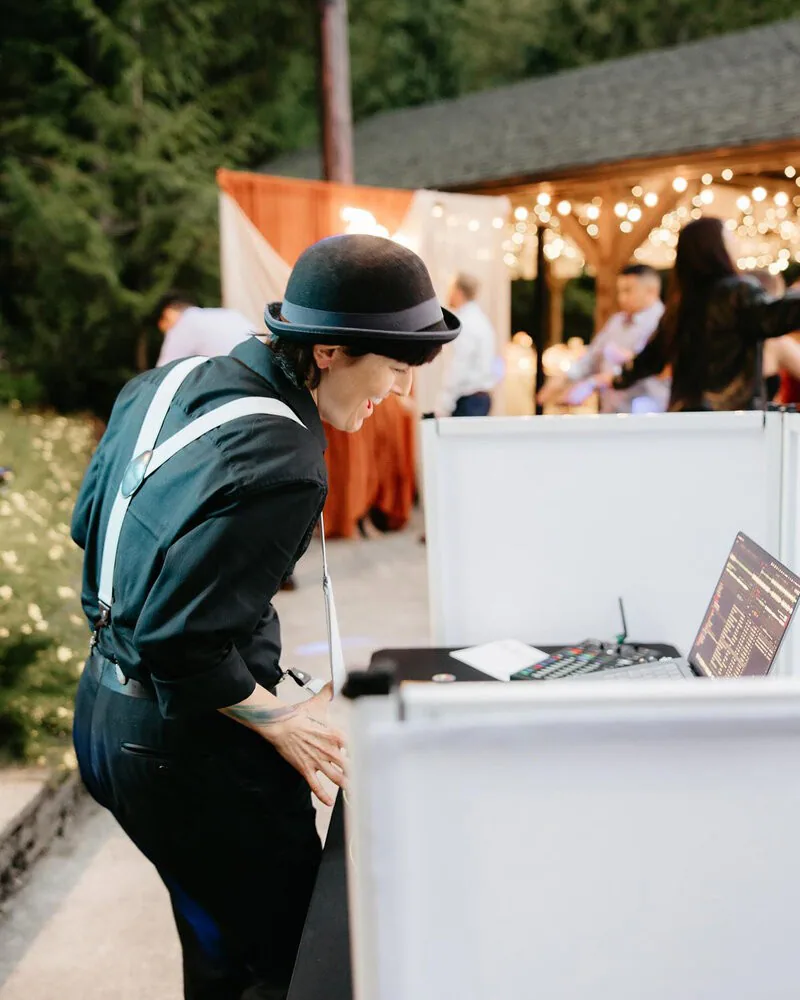
Choose ceremony music that fits the people and moments in your celebration. There is no single tempo or genre every couple must use. Check any requirements with your officiant or venue, then plan the recordings, entrance order and cues together.
What Wedding Ceremony Music Has to Do
Wedding ceremony music covers four moments in most ceremonies. The prelude covers guest arrival. The processional moves people down an aisle. An interlude sometimes covers a signing or a unity moment. The recessional sends everyone out.
Each one has a different job. Only two of them get much attention.
Choosing Processional Wedding Ceremony Music
Most wedding ceremony music advice starts with a list of approved songs. Drop that idea. Almost any song works for walking down an aisle. DJ Kelli has seen slow songs, uptempo songs, and songs nobody expected. Fast tempos often surprise guests and lift the room.
Even the traditional choice is less traditional than it seems. Wagner wrote the Bridal Chorus for an 1850 opera. It became a wedding standard through royal weddings and repetition. Music historians have traced how that association formed, and it had little to do with weddings.
So the useful test is not a rule. It is a rehearsal. Play the song on your phone and picture your wedding party walking to it. If you can see it clearly and it brings you joy, you have your answer.
Consider the lyrics, the opening, and whether you want an instrumental version. Then identify the exact recording in Vibo: artist, version, and a link where useful. For a special entrance cue, note the intended moment and discuss timing with DJ Kelli. A live version, cover, or remix can have a different introduction from the original.
Plan the Transitions Between Processional Songs
You can use one song for the wedding party and another for the couple’s entrance. Each change needs a clear cue, an agreed starting point and enough time for the transition.
The switch can land late. The next song might not reach its best section before it has to change. Occasionally songs play in the wrong order. None of this is catastrophic, though it happens during the most sensitive minutes of the day.
Clarity solves most of it. Write down who walks to which song, in what order, and where each song should start or loop from. We keep those cue notes in the Vibo planning app, so nothing depends on memory during the processional. One song for everyone removes the problem entirely.
Recessional Wedding Ceremony Music Sets Up Cocktail Hour
The recessional usually gets decided last, almost as an afterthought. That is backwards. This is the song that hands your guests off to the rest of the day.
Use the same rehearsal. Picture the kiss, the officiant announcing you, and the walk back down the aisle. You will probably stop partway for a photo. Does the song still do what you want in that moment?
Upbeat choices get the cheering going, which many couples want. Familiar songs land instantly. Less familiar ones sometimes need to reach a chorus before the room recognizes them. A slow recessional also works if that matches the tone you want. Energy carries forward either way, so it is worth a real decision.
Prelude and Interlude Choices Need Less Attention
Prelude wedding ceremony music plays to a half-empty space. Guests arrive across that whole window, so almost nobody hears the beginning of it.
If one or two arrival songs matter to you, identify them and discuss where they should fit before the processional. Otherwise, a genre or a few examples can guide the selection. For an interlude, explain the activity and whether you prefer lyrics or an instrumental recording.
Live Versus Recorded Ceremony Music
Both work. The flexibility people assume they lose with live players is mostly still there.
Discuss timing adjustments with the DJ or musicians before the ceremony. A fade, repeat or edited version may suit a particular entrance, but the right approach depends on the recording or live arrangement. Agree on written cues and make sure the person handling the music can follow the aisle timing. Recorded wedding ceremony music gives you the exact arrangement you chose, every time.
How the music actually reaches your guests is a separate question. Outdoor ceremony audio has its own set of problems, and they are worth understanding before the day.
Common Questions About Wedding Ceremony Music
Is there a wrong song for the processional?
Choose a song that feels right to you, then check its lyrics, the entrance timing and any officiant or venue requirements.
What if the song ends before everyone is down the aisle?
Agree on a suitable repeat, continuation or fade with the DJ or musicians before the ceremony. The right approach depends on the recording, arrangement and entrance plan.
Should we use the instrumental version?
Sometimes. Lyrics are audible during a quiet ceremony, so listen to them once with that in mind before deciding.
How many songs do we need?
Three covers most ceremonies. Prelude, processional, recessional. Everything beyond that is optional.
Once you have chosen the recordings, gather the entrance order, start points, microphone needs and the person giving each cue. Use the final ceremony music and cue checklist to bring those decisions into the final DJ planning conversation.