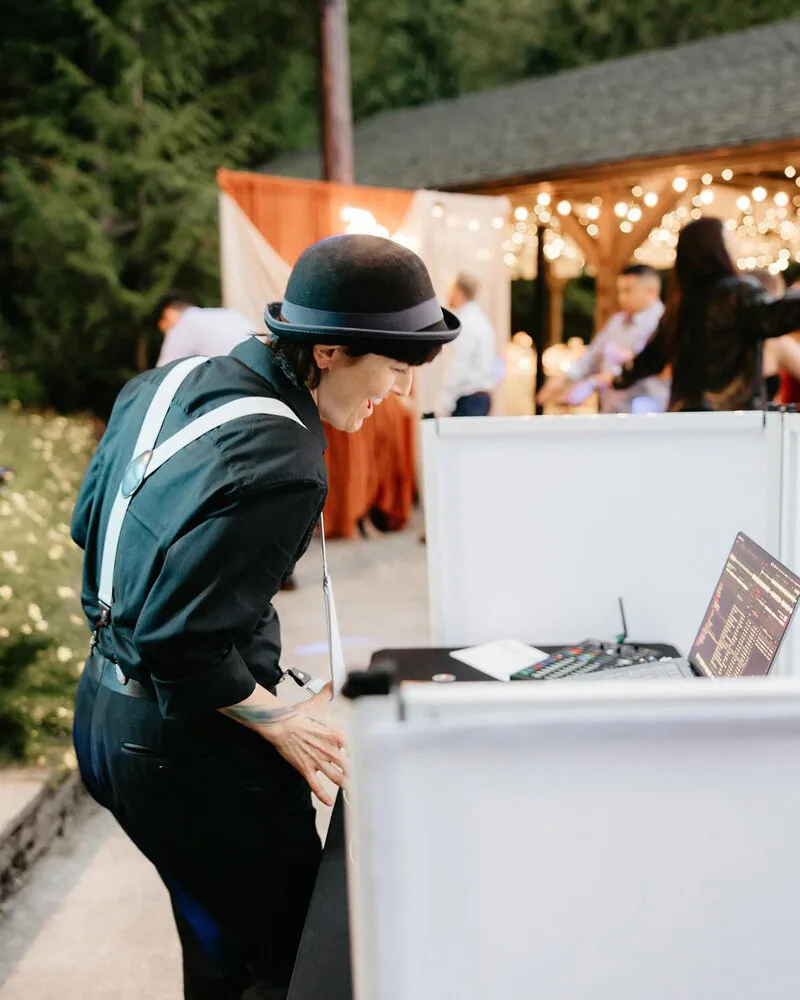
For a wedding at Trinity Tree Farm in Issaquah, start your DJ plan with the exact venue you booked, the ceremony location, and the transition into the reception. Then decide which songs you want to choose yourself and which selections you want DJ Kelli to recommend.
Trinity Tree Farm has two venues, The Barn and The Lodge. Confirm the spaces included in your agreement with Trinity Tree Farm; a plan for one space should not automatically be reused for the other.
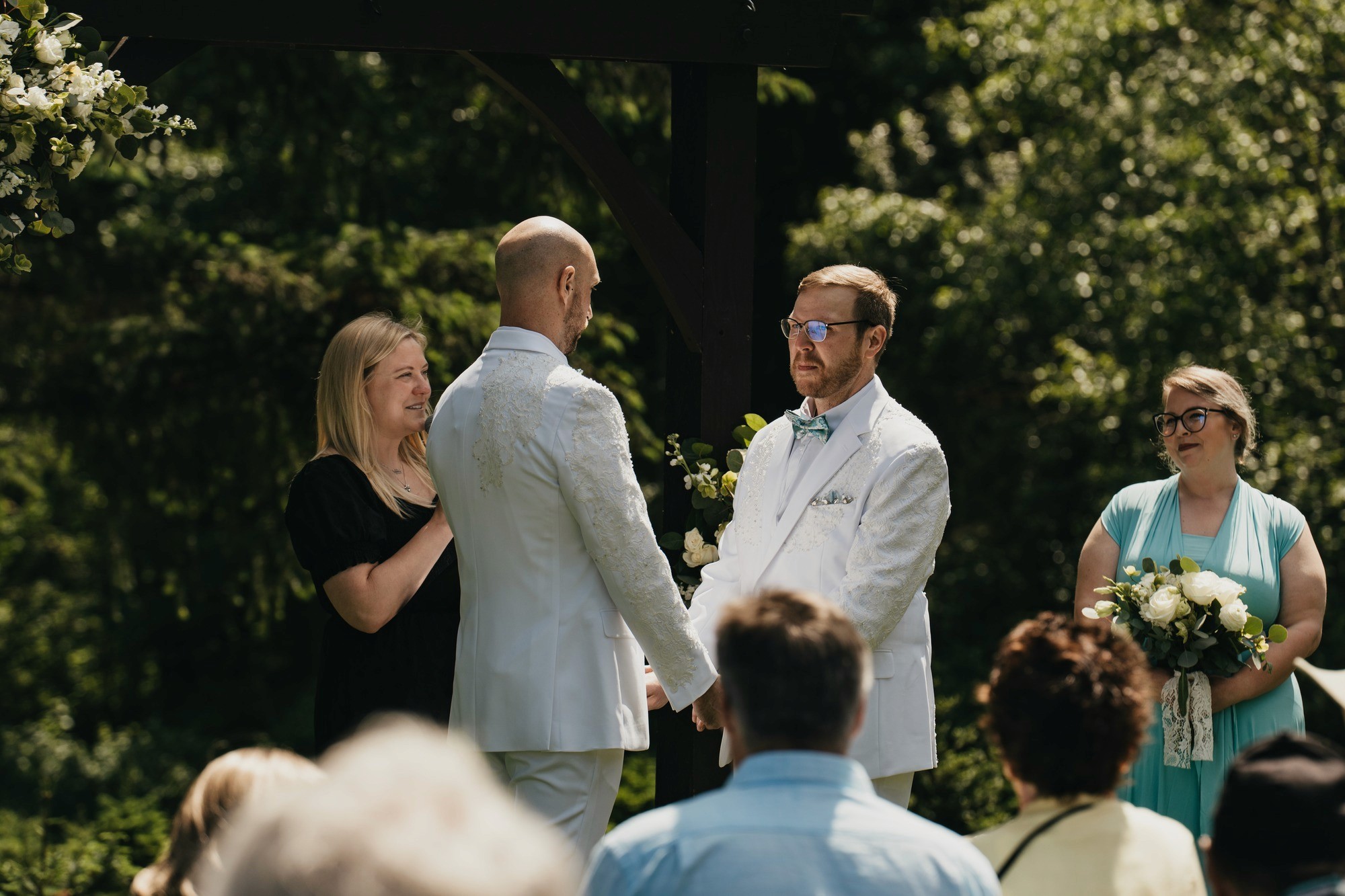
Cover photo: Outdoor ceremony at Trinity Tree Farm. Photo: Jamie Buckley Photography
A real planning example: choosing the moments that matter
For a June 2025 wedding at Trinity Tree Farm, the couple’s planning record set aside guest-arrival music before an outdoor ceremony. The processional and recessional had separate selections, while the couple chose to let the DJ select cocktail-hour music. During the final planning conversation, the couple also asked for help with several reception music choices and approved the recommendations.
That is a useful starting point if you love music but do not want to build every playlist. You can choose a meaningful ceremony entrance or first dance and still delegate the background music. You can also provide a detailed playlist. What matters is making the distinction clear before the wedding.
Write down the ceremony cues, not just the song titles
For each entrance, identify who is walking, the exact recording, the starting point in the track, and who will signal that the group is ready. Include the recessional cue and microphone needs for the officiant or any readers. If the weather changes your ceremony location, review those same details for the backup space.
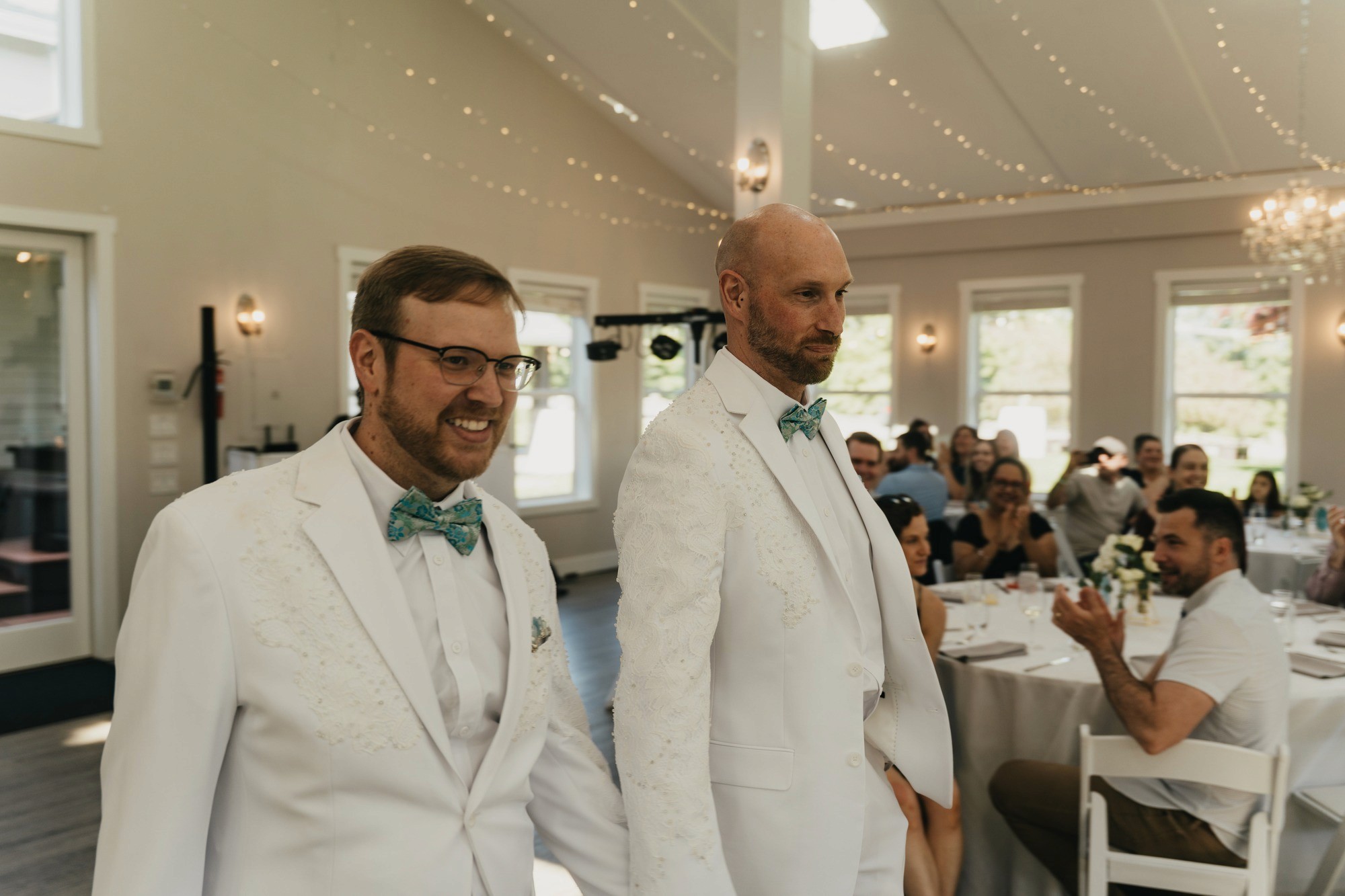
Indoor wedding reception at Trinity Tree Farm. Photo: Jamie Buckley Photography
Our wedding music planning guide explains how to separate must-play songs, suggestions, and do-not-play requests.
Plan the move from vows to conversation to dancing
Mark where guests will gather after the ceremony, where speeches will happen, and where the dance floor will be. Ask whether each area needs its own sound coverage and when equipment can be placed. A shared venue address does not answer those questions.
Keep speech volume and background music appropriate for conversation, then agree on the cue that shifts attention to introductions, a first dance, or open dancing. Your reception can include the traditions you enjoy without adding activities that do not fit.

Guests dancing in the reception room. Photo: Jamie Buckley Photography
What should you bring to the final DJ meeting?
Bring your venue and weather-backup layouts, the latest timeline, pronunciation notes, key song versions, and the names of the people giving cues. Use the final wedding DJ planning checklist to collect those decisions in one place.
Planning a Trinity Tree Farm wedding? Explore our wedding DJ planning resources and share your date, booked venue space, and coverage needs with Puget Sounds Featuring DJ Kelli.
For a wedding at Trinity Tree Farm in Issaquah, start your DJ plan with the exact venue you booked, the ceremony location, and the transition into the reception. Then decide which songs you want to choose yourself and which selections you want DJ Kelli to recommend.
Trinity Tree Farm has two venues, The Barn and The Lodge. Confirm the spaces included in your agreement with Trinity Tree Farm; a plan for one space should not automatically be reused for the other.
Cover photo: Outdoor ceremony at Trinity Tree Farm. Photo: Jamie Buckley Photography
A real planning example: choosing the moments that matter
For a June 2025 wedding at Trinity Tree Farm, the couple’s planning record set aside guest-arrival music before an outdoor ceremony. The processional and recessional had separate selections, while the couple chose to let the DJ select cocktail-hour music. During the final planning conversation, the couple also asked for help with several reception music choices and approved the recommendations.
That is a useful starting point if you love music but do not want to build every playlist. You can choose a meaningful ceremony entrance or first dance and still delegate the background music. You can also provide a detailed playlist. What matters is making the distinction clear before the wedding.
Write down the ceremony cues, not just the song titles
For each entrance, identify who is walking, the exact recording, the starting point in the track, and who will signal that the group is ready. Include the recessional cue and microphone needs for the officiant or any readers. If the weather changes your ceremony location, review those same details for the backup space.
Indoor wedding reception at Trinity Tree Farm. Photo: Jamie Buckley Photography
Our wedding music planning guide explains how to separate must-play songs, suggestions, and do-not-play requests.
Plan the move from vows to conversation to dancing
Mark where guests will gather after the ceremony, where speeches will happen, and where the dance floor will be. Ask whether each area needs its own sound coverage and when equipment can be placed. A shared venue address does not answer those questions.
Keep speech volume and background music appropriate for conversation, then agree on the cue that shifts attention to introductions, a first dance, or open dancing. Your reception can include the traditions you enjoy without adding activities that do not fit.
Guests dancing in the reception room. Photo: Jamie Buckley Photography
What should you bring to the final DJ meeting?
Bring your venue and weather-backup layouts, the latest timeline, pronunciation notes, key song versions, and the names of the people giving cues. Use the final wedding DJ planning checklist to collect those decisions in one place.
Planning a Trinity Tree Farm wedding? Explore our wedding DJ planning resources and share your date, booked venue space, and coverage needs with Puget Sounds Featuring DJ Kelli.