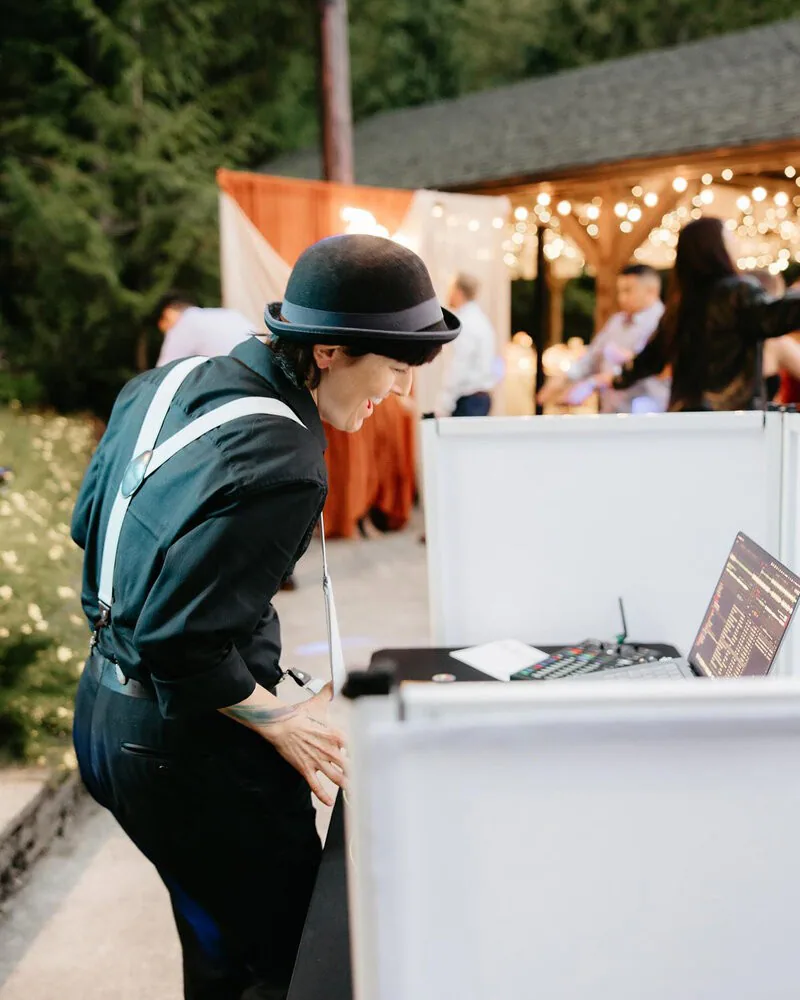
A corporate event run of show is the crew-facing schedule. It tells every vendor, host, and internal lead what happens, when, and who owns the cue. Most planners already have an agenda. The run of show sits underneath it and carries the timing guests never see.
The distinction matters more than it first appears. An agenda says lunch at noon. A run of show says catering opens the lines at 11:58. The DJ pulls walk-in music down at 12:00. Then the emcee releases tables in sequence. One document orders the guests. The other keeps the room from stalling.
DJ Kelli notices that the smoothest corporate events share one trait. They have a single decision-maker and a clear cueing language. Most dead air does not come from a missing plan. It comes from an unclear handoff, where nobody knows who confirms the next speaker is ready.
Corporate crowds also behave differently than wedding crowds. Guests arrive on their best behavior. They are working alongside people they see every week. Executives run long, dinner service shifts, and slides fail. A corporate event run of show has to guide the team while still allowing controlled changes.
Below is how it should come together, section by section.
What a corporate event run of show actually is
This is not the wedding-style timeline rewritten for a company party. It is a cue sheet. Each line names a moment, a start time, an owner, and the technical action attached. Microphone live. Music down. Slide up. Lights to full.
The value comes from the owner column. A time with no name attached is a guess. When each cue has one person responsible, the room moves without anyone scrambling. That is the core of a strong corporate event run of show. It is where experienced corporate DJ services in Seattle earn their keep. Most templates leave that column thin.
Who owns each cue in the run of show
Corporate events usually involve several roles. There is an internal event lead, a venue contact, a planner, and a DJ or MC on audio. Roles blur quickly when nobody assigns them in advance.
DJ Kelli confirms ownership before the event rather than during it. Who approves a change once the program is running? Who signals that the next speaker is ready? Who decides to hold a transition when catering needs five more minutes? These answers belong in the document, not in someone’s memory.
Coordinating the DJ, MC, venue, and AV team
Clear announcements help a corporate audience shift from networking to the program. DJ Kelli watches the room and times microphone cues so speakers can be heard. Confirm who introduces each speaker and who signals that the program is ready to begin.
Sound design carries real weight. Speakers should be placed so everyone hears without the volume feeling aggressive. Walk-up tracks, microphone placement, and speaker readiness matter as much as the printed schedule. Building the song and playlist plan early keeps walk-up tracks and networking or dinner music organized. Music normally stops for speeches so the words remain the focus; any exception should be specifically planned. A cue can read clearly on paper and still fail if the microphone is not ready.
Common run of show problems and how to recover
Speakers run long. Dinner service falls behind. Slides do not load. These are not rare events. They happen at most corporate functions. A good corporate event run of show already accounts for them.
Not every corporate event needs a busy dance floor. If dancing is part of the brief, DJ Kelli may try one or two line dances to make joining in feel easier, then respond to the room. At other events, comfortable conversation is the intended result.
Asking employees for song suggestions gives the DJ useful clues about the group. Requests can inform the plan, but no song guarantees participation. Agree on the event’s goals before judging its success by dancing alone.
When the schedule compresses, the recovery stays quiet. Shorten an announcement. Reorder a formality. Hold a transition until the room is ready. Guests rarely notice these adjustments, which is the point.
What to send your DJ before the event
The team runs smoother when the DJ receives the full picture ahead of time. Send the current run of show first. Include the names and pronunciations for anyone introduced, the approved song list, and the contingency notes for late speakers.
A corporate event run of show works best when it is built together and shared early. Still choosing a vendor? What to look for in a corporate event DJ covers the vetting side. The more the DJ knows before doors open, the fewer decisions get made under pressure once the program starts.
Match the entertainment to the program
Our corporate DJ versus live band comparison explains which responsibilities to assign before putting the entertainment into your run of show.
If you are planning a personal celebration, the birthday and anniversary DJ planning guide is a more relevant starting point.
Corporate event run of show FAQ
Is a corporate event run of show just a list of start times?
No. Times are only the visible layer. The part planners underestimate is ownership. Each cue needs a name attached. Who gives it, who confirms the next speaker is ready, and who can approve a change. A schedule without owners is really just a guess.
Why do run of show templates fail at real events?
Templates look orderly because nothing interrupts them. Real events interrupt constantly. Speakers run long, executives arrive late, dinner service shifts, and slides fail. So a working run of show has to guide the team and still allow controlled changes.
What usually causes dead air at a corporate event?
Rarely the music. DJ Kelli finds dead air almost always traces back to an unclear handoff. Someone is unsure who cues the next moment. A clear decision-maker and explicit cueing language prevent most of it.
Can the run of show change once the event starts?
Yes, and it should be built to. The key is a single approver. When one person decides and communicates each change, adjustments stay clean. When several people adjust on their own, the timeline quickly unravels.
Planning a Seattle corporate event and want the run of show handled with you rather than handed to you? Check your date with Puget Sounds.
For a seasonal company celebration, use our corporate holiday-party music checklist to agree on seasonal music, employee suggestions, lyric preferences and the handoff between awards and dancing.